
October 2026 Market Recap
November 6, 2026
October 2026 market recap: what the tech selloff, the Fed and midterm elections mean for your portfolio
Key Takeaways:
- Technology and communications stocks pulled back in October amid concerns over capital spending and forward guidance, but the rest of the S&P 500 did well.
- Bonds provided ballast as stocks fell, earning back most of their losses from September.
- Looking ahead, strong earnings and broadening performance across sectors give us reason to be optimistic.
October Market Movements
Equity recap: Tech sold off, but the rest of the S&P 500 rose
Global stocks fell by 1.6% in October, led down by technology and communication stocks in the U.S. and Emerging Markets. We have seen markets waver all year on whether high capital spending will bear fruit for big tech companies, and October was a particularly painful month for companies that missed on earnings targets or gave disappointing forward guidance.
The good news? Every other U.S. sector (outside of technology and communications) finished the month higher, with multiple sectors (energy, consumer staples, utilities and health care) delivering double-digit returns for the month.
Unfortunately, international stocks provided limited portfolio benefits: Developed International stocks fell slightly less than U.S. stocks in October, but Emerging Markets fell 8% as AI concerns reverberated across Asian memory and chip makers.
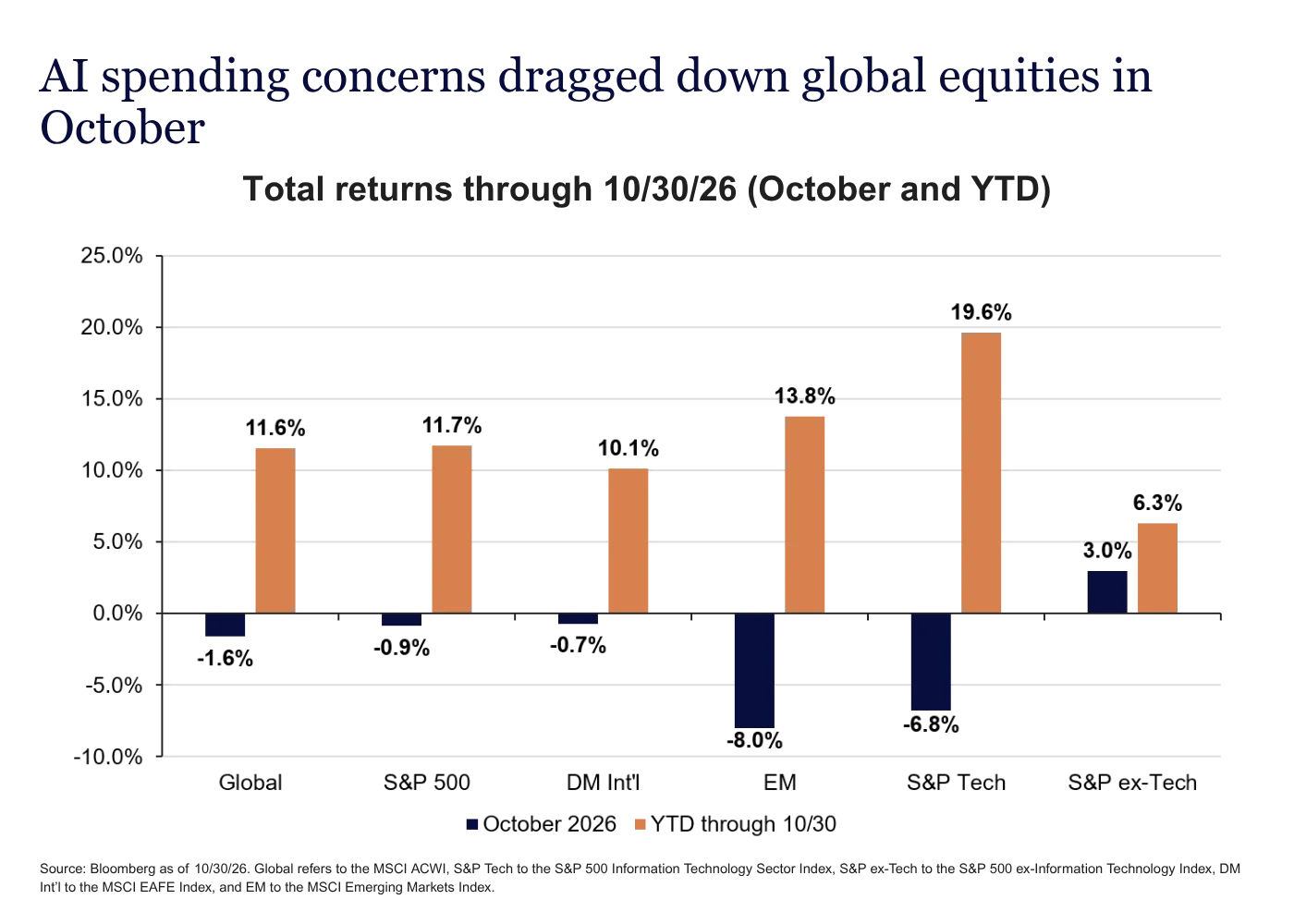
AI spending concerns dragged down global equities in October
Our view on stocks
We remain constructive on stock markets. After all, earnings remain strong: with about 60% of S&P 500 companies reporting, Q3 earnings grew at roughly 33% year over year, one of the strongest quarters in decades outside a post-recession recovery. Combine that with healthy employment, robust consumer spending, and a broadening stock market, we find plenty of reason to be optimistic.
The risk is AI spending: the largest AI companies are on pace to spend roughly $800 billion on capital expenditures this year, nearly double 2025, and are estimated to spend $1.3 trillion for 2027. Their spending currently exceeds operating cash, and growth will need to beat already-high expectations in order to send stocks higher: AI infrastructure company earnings growth is forecast to peak near 80% this quarter before slowing to roughly 40% in 2027.
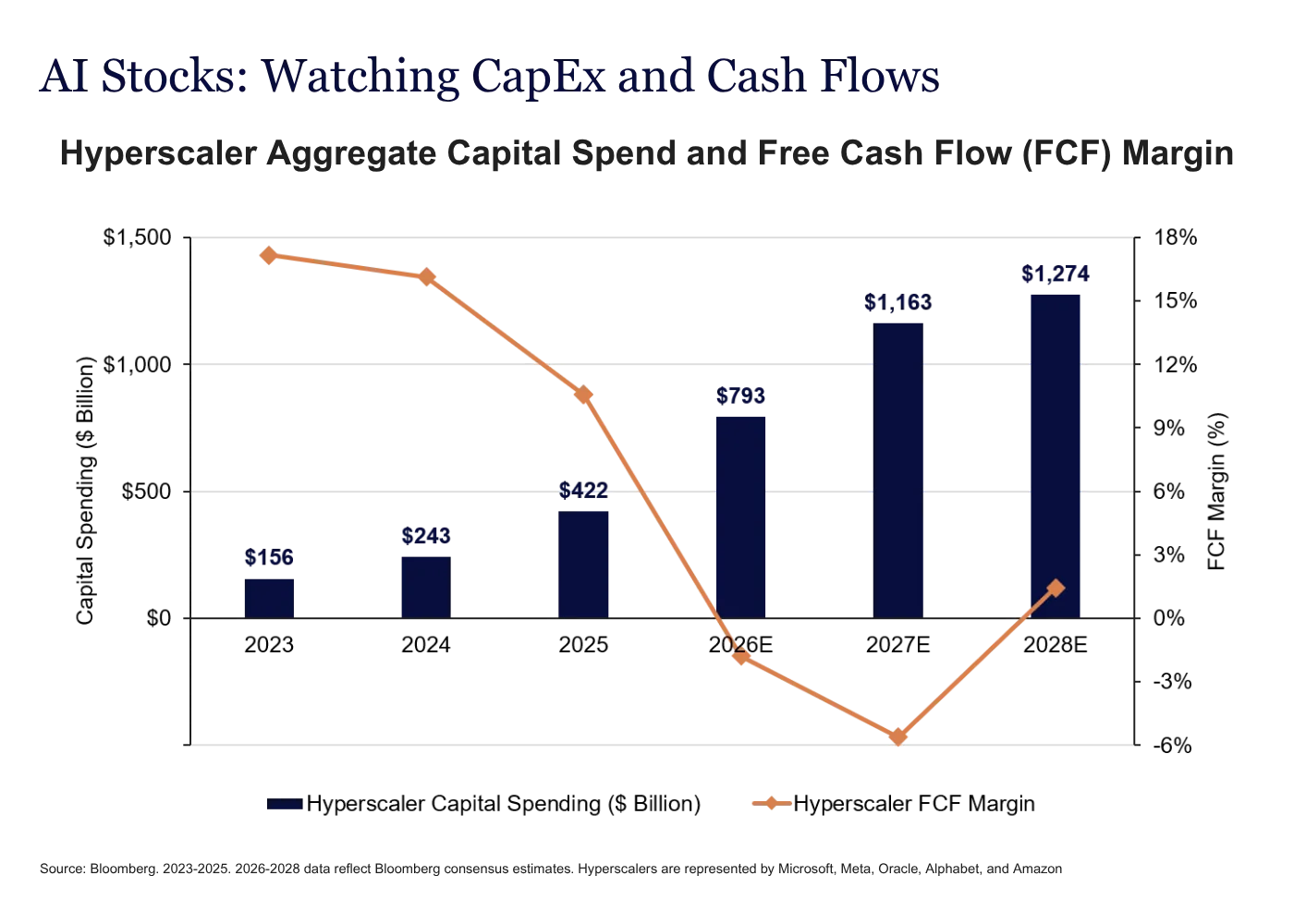
Many of these companies have a history of beating high expectations, so we’re staying invested, but do expect volatility in individual stocks, and in the tech sector more broadly, to continue as the race to capture AI demand creates winners and losers. That’s why we think it’s critical to manage individual stock and sector risk through a diversified portfolio.
Bond market update: ballast in a tough month for stocks
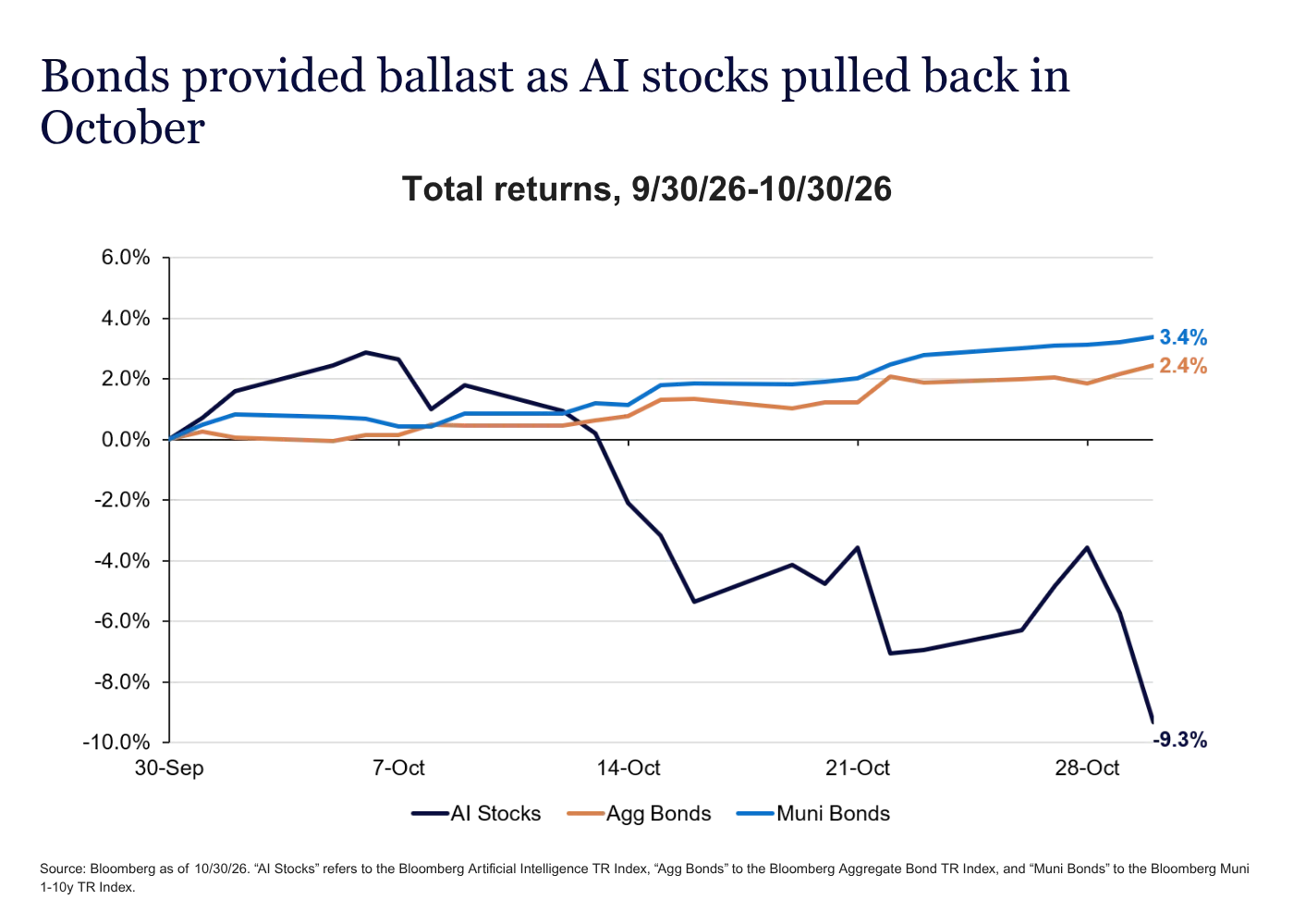
Bonds posted strong returns in October, earning back most of their losses from September. We regularly talk about staying invested through stock market volatility, but last month illustrated that this principle holds true for bonds as well.
When bonds fell in September, we were able to realize losses that can offset taxable gains for many of our clients, while still keeping them invested so they could benefit from October’s rebound.
Many clients have asked us how we’re thinking about diversifying AI stock risk: what do we think will do well if the AI trade collapses? We believe that high-quality bonds would provide valuable ballast in this scenario, and saw that play out in October’s tech-driven selloff.
Bonds provided ballast as AI stocks pulled back in October
Looking ahead, we like the higher yields on offer in high quality bonds, with a preference for highly rated securitized debt over corporates. The yields in high yield and private credit can sound appealing, but we don’t think they adequately compensate investors for risk. If we’re going to take on more risk, we’d rather do it in stocks than in low quality credit.
What the midterm election results mean for markets
The U.S. midterm elections are now behind us, and the Democratic Party won majorities in both the House and Senate. Democratic gains were higher than many had expected, with seats in typically-Republican states such as Texas and Kansas flipping from red to blue.
Historically, markets haven’t shown a consistent preference for which party controls Congress, and divided government has often meant fewer big swings in policy.
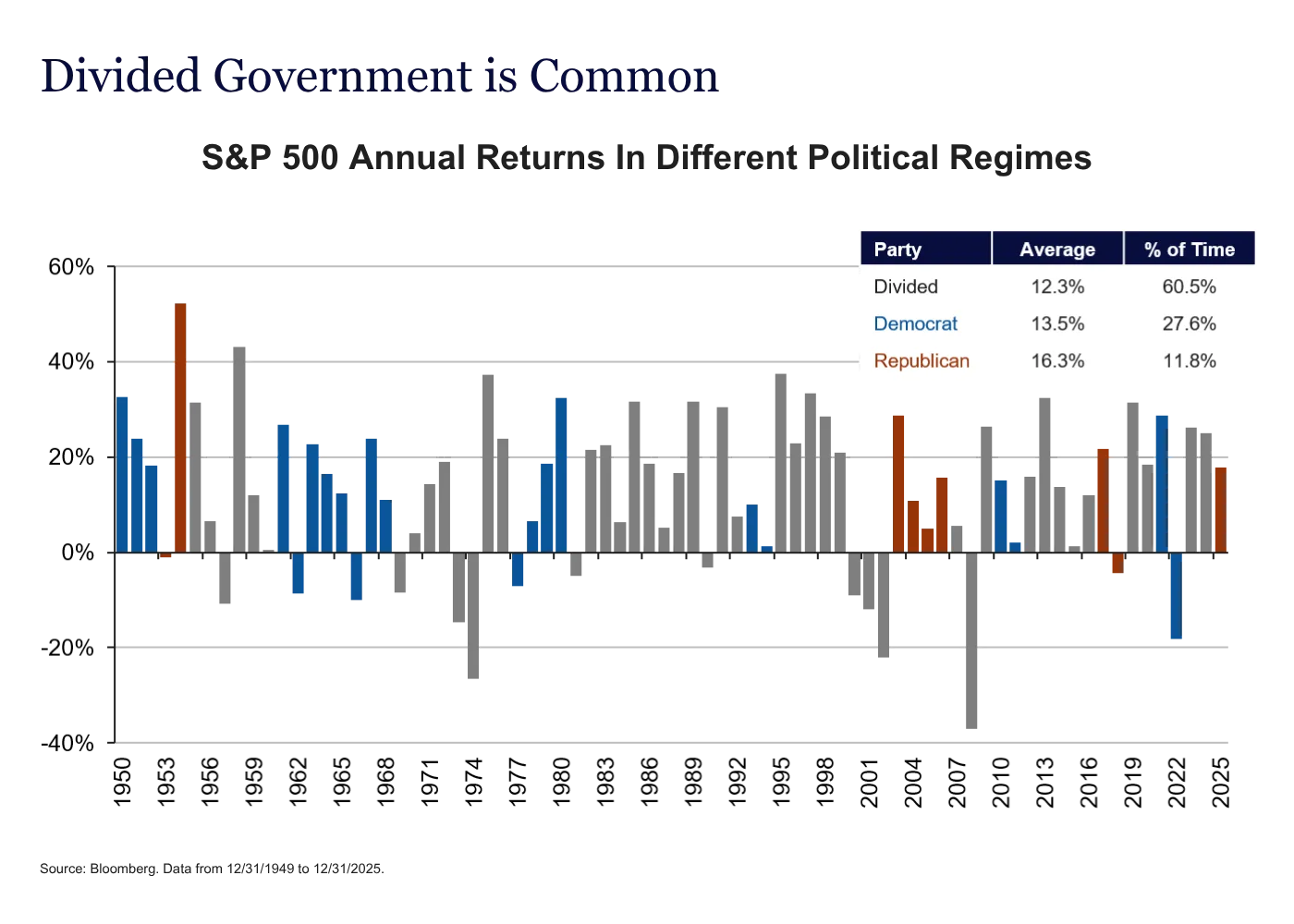
Markets did rally the day following the election, though questions remain on what the new makeup of Congress – in combination with many local ballot measures targeting data center development – might mean for AI stocks. There were over 40 local ballot measures on data center development, and nearly all of them went against new construction via moratoria, bans, or zoning limits. Several newly elected governors and senators also campaigned on slowing data center development in their states.
If new capacity gets harder to build, companies that already have data centers up and running could benefit, while companies borrowing heavily to catch up could feel more pressure. This could further widen the gap between AI winners and losers, and an additional reason to diversify any big concentrated bets.
What we’re watching: the Fed, inflation, and earnings
The Federal Reserve held rates steady at its meeting in October, with two members of the committee dissenting in favor of a hike. As of November 4, markets are pricing in an 83% likelihood that the Fed increases interest rates by 0.25% at their next meeting in December (as per CME FedWatch).
Between now and then, we’ll get more data on inflation and the health of the economy, both of which will factor into the Fed’s decision. The war in Iran and uncertainty around the Strait of Hormuz could also continue to impact energy prices, which feeds into the inflation data the Fed watches closely.
Lastly, earnings season continues through November, including Nvidia later this month. Those results, along with investor sentiment around the upcoming Anthropic IPO and the evolving political environment around AI infrastructure, will continue to shape our view of AI stocks and the broader stock market.
How we’re positioned
We believe the upfront cost of building AI infrastructure will create winners and losers. Companies that don’t make the investment will struggle to compete, but the sheer amount of capital required, especially amid rising borrowing costs, makes it likely that some of the companies that do invest will fail. We’ve already seen extreme swings in individual stocks even as index returns have stayed relatively benign.
As a result, we prefer to maintain indexed exposure rather than swing for the fences and risk a miss. We’re keeping our exposure to broad global stock markets, leaning on international stocks to diversify our U.S. exposure, and using bonds and alternatives to generate income and provide ballast in the event of a larger stock selloff.
Even if the Fed hikes rates again, we think today’s yields make municipal bonds particularly attractive for investors in high tax brackets who live in high-tax states. We’re comfortable with our bond exposure at these levels and are continuing to diversify carefully across bond sectors.
If you have questions about your own portfolio or financial situation, please reach out to your Freestone Client Advisor.
General Disclosure: For educational and discussion purposes only. Nothing herein is intended to provide, and it should not be relied upon for, accounting, legal, tax, or investment advice or recommendations. We are not making any specific recommendations regarding any security or investment strategy, and you should not make any investing decisions based on the information herein. This document contains general information, opinions, and market commentary, and is only a summary of certain issues and events that we believe might be of interest generally. Opinions are subject to change without notice. While the information presented is believed to be reliable, no representation or warranty is made concerning the accuracy of any information provided, and we do not undertake any responsibility to update such information or advise you of any change in such information in the future. This document speaks only as of the date indicated. Indices referenced in this document are not managed and it is not possible to invest in an index. Past performance of any investment strategy is not a reliable indicator of future results.