Q2 2026 Market Recap: Inflation Returns, Rates Reverse, and Markets Stay Resilient
July 15, 2026
In the second quarter of 2026, the conflict in Iran reignited inflation, pushing the Federal Reserve (“the Fed”) from expected rate cuts toward a possible hike. Despite the shock, stocks kept climbing, and higher yields made bonds more attractive. Freestone’s guidance is unchanged: stay invested and diversified.
Why Did Inflation Rise in Q2 2026?
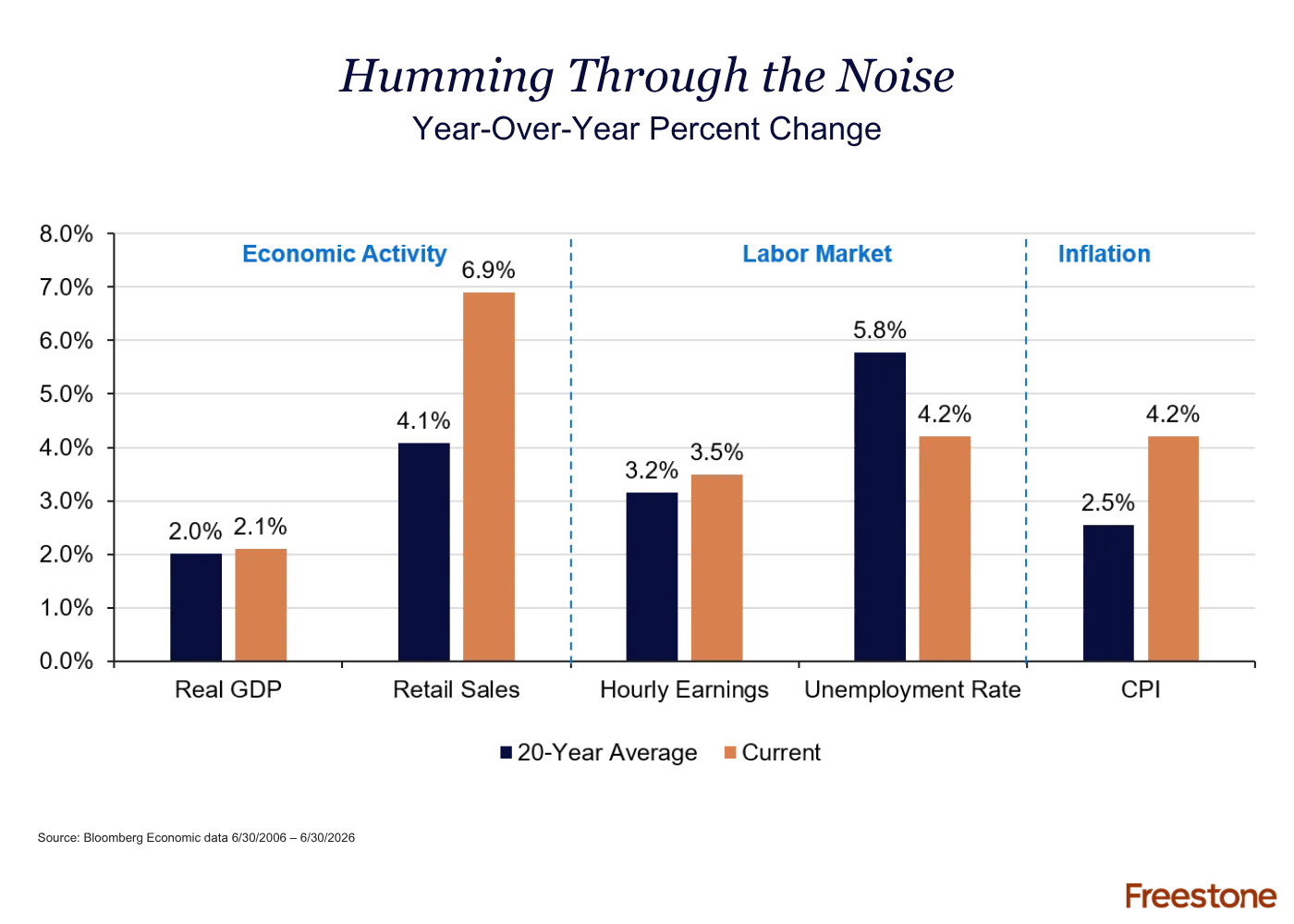
Inflation reaccelerated in the second quarter primarily because the conflict in Iran drove energy and goods prices higher. The broader U.S. economy turned in a mostly healthy report card this quarter, Making inflation the one clear outlier in an otherwise solid quarter.
- U.S. economic growth held near its 20-year average, unemployment stayed below its historical norm, and retail sales ran well above trend — signs of a resilient consumer and labor market.
- The Consumer Price Index (CPI) is pushing near 4.2%, nearly double its 20-year average, as the conflict in Iran urged energy and goods prices higher.
- Why it matters: Inflation erodes purchasing power directly, and it’s the biggest input into the Fed’s next move. The same forces lifting gas and grocery bills are reshaping what bonds pay investors.
Is the Federal Reserve Cutting or Hiking Rates in 2026?
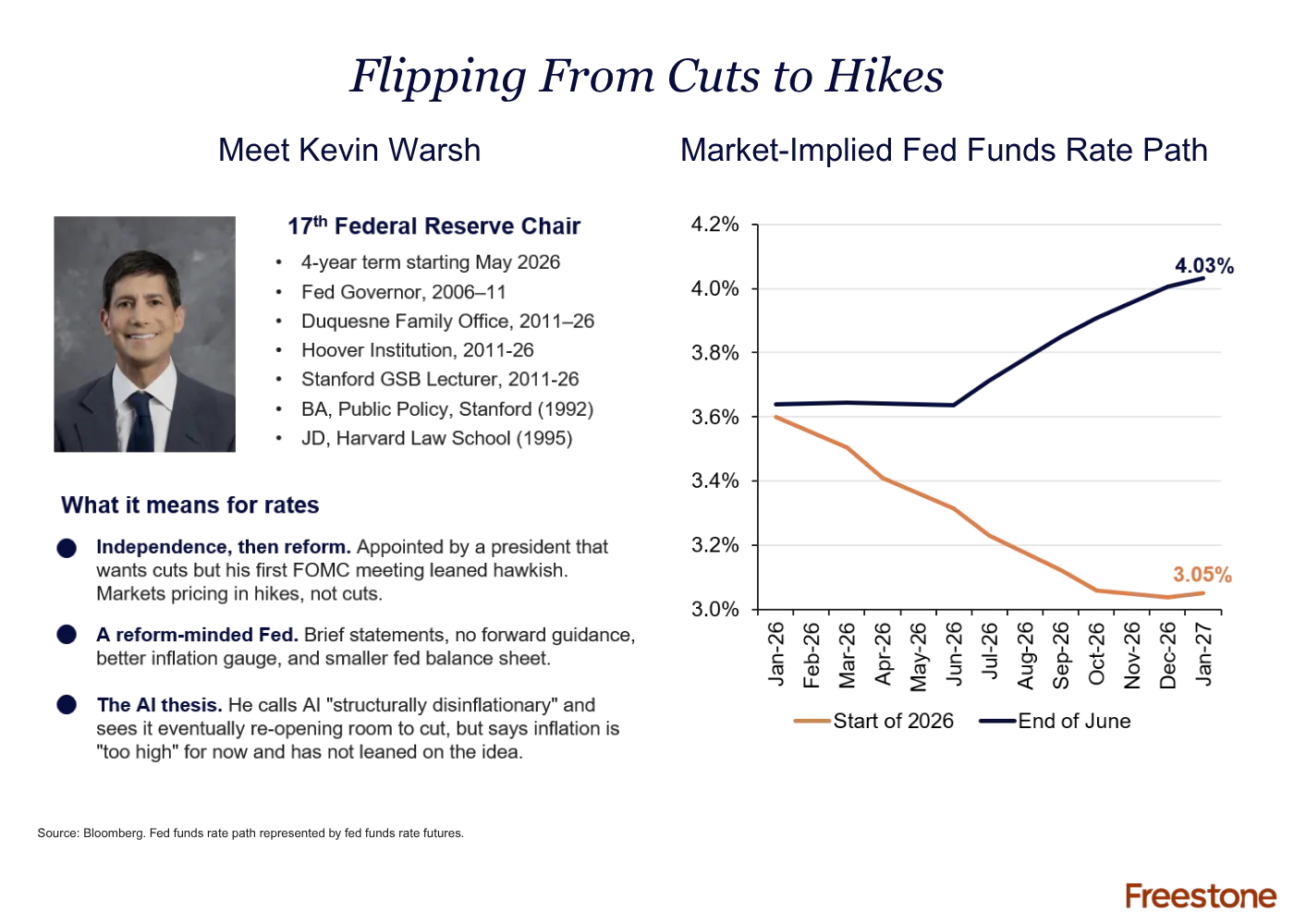
The Federal Reserve’s rate outlook has completely inverted during 2026. Markets entered the year expecting roughly three rate cuts and, by the end of June, were pricing in a rate hike instead.
- At the start of 2026, markets expected about three cuts, implying a policy rate near 3.05% by early 2027. By the end of June, markets were pricing a hike toward roughly 4.03%.
- New Fed Chair Kevin Warsh, sworn in this May, struck a hawkish tone at his first FOMC meeting in June. He also used the meeting to preview how he intends to reform the way the Fed operates. He characterized AI as “structurally disinflationary” in the long-term but says inflation is too high to act on that yet.
- The market’s implied fed funds rate path rose meaningfully from where it started the year, reflecting reaccelerating inflation and a labor market too sturdy to justify easing.
- Why it matters: A Fed on hold, or hiking, for longer changes the return math on cash, bonds, and loans. Plan for higher-for-longer, rather than imminent relief. Elevated rates are a headwind for borrowers, but they are a genuine opportunity for fixed income investors.
Why Did Stocks Keep Rising Despite Higher Rates?
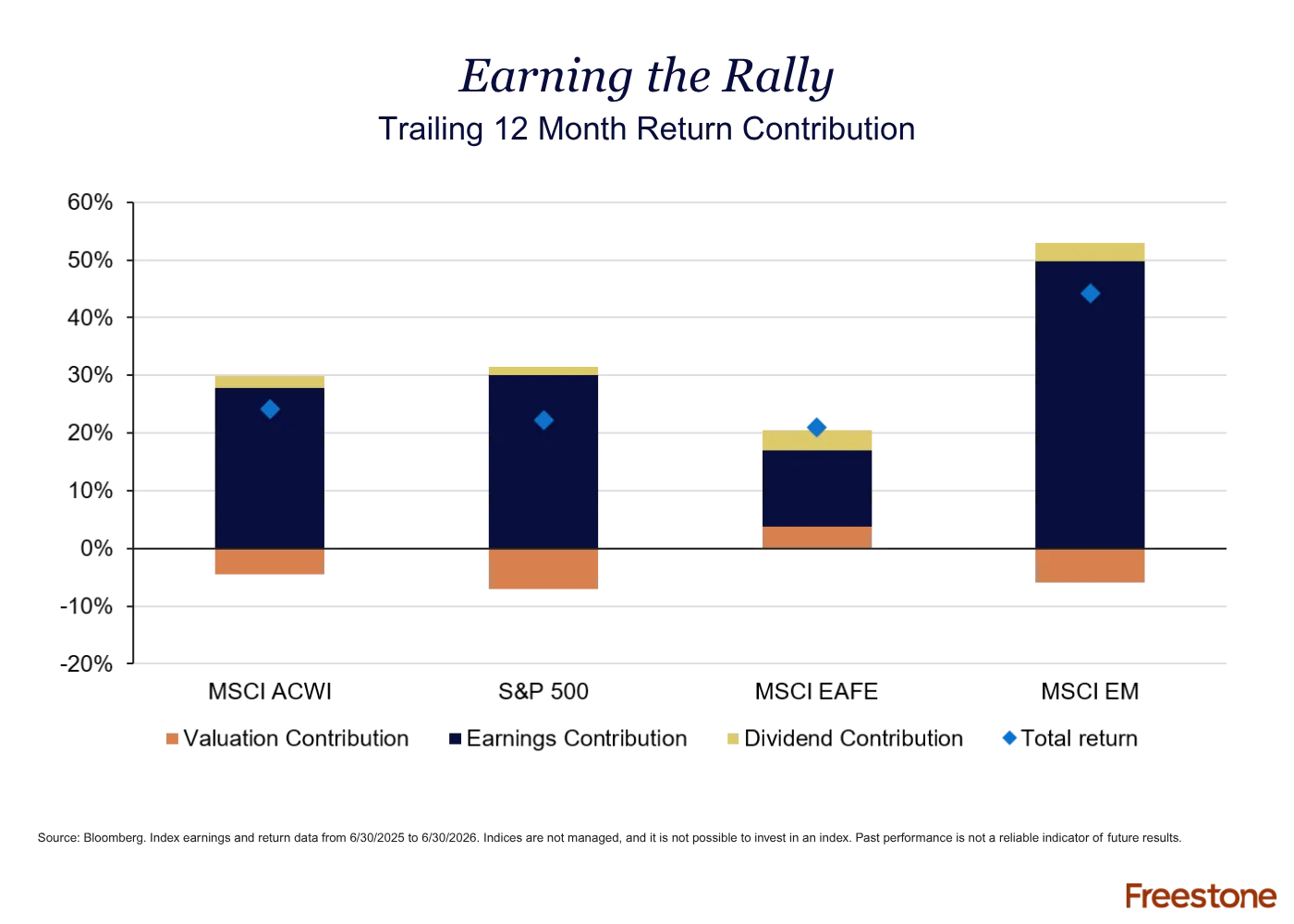
Global equities rose in Q2 2026 mainly because corporate earnings grew, not because investors paid more for each dollar profit. That makes the rally more durable than a valuation-driven one, though leadership grew more concentrated in a handful of AI-linked giants.
- Nearly all the past year’s gains in the S&P 500 and global markets came from earnings growth, not investors paying more per dollar of profit — a healthier foundation than a valuation-driven rally.
- Emerging markets stocks delivered some of the strongest earnings-driven gains of all, a reminder that leadership is not confined to U.S. large caps.
- Why it matters: Earnings-led rallies tend to outlast hype-led ones, but concentrated leadership means diversification across regions and sectors matters now more than ever.
Are Bonds a Good Investment?
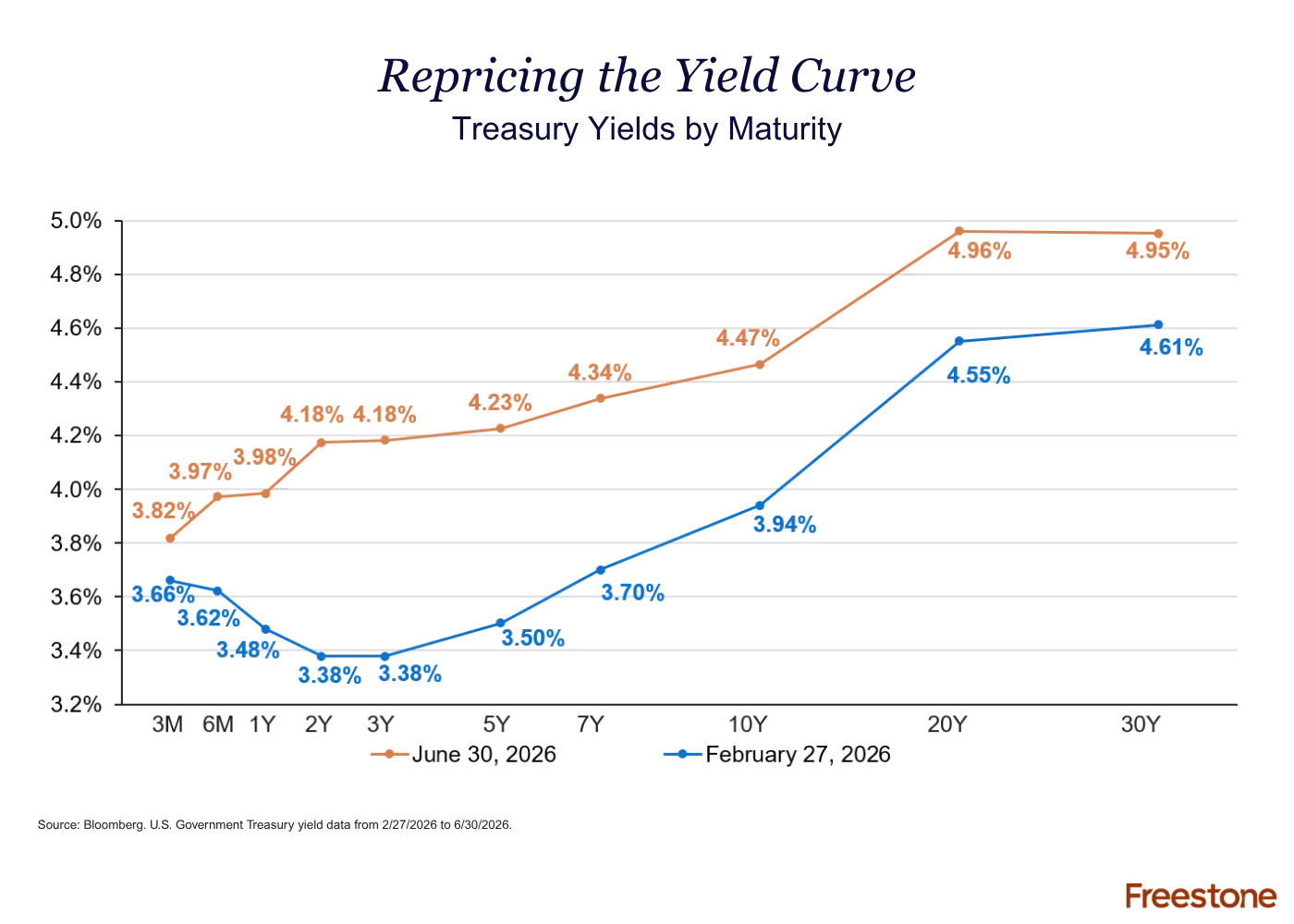
Higher yields made bonds more attractive coming out of Q2 2026. As inflation reaccelerated and rate-cut expectations flipped to hike expectations, the entire yield curve shifted higher, pressuring bond prices in the short-term but improving expected future returns.
- Treasury yields climbed across nearly every maturity since the conflict began, with the biggest moves in the front and middle of the curve as markets repriced for a less accommodative Fed.
- Rising rates did pressure bond prices over the period, but they leave fixed income more attractive going forward.
- Why it matters: Higher starting yields have historically predicted higher future bond returns, making this quarter’s back-up in rates a real opportunity for a fixed income allocation.
What is Freestone Watching for the Rest of 2026?
Q2 2026 was defined by a geopolitical shock that reignited inflation, pushed the Fed toward a harder line, and repriced the bond market, while equities climbed on earnings rather than speculation. Freestone continues to monitor three questions:
- How long conflict-driven inflation persists
- Whether the Fed follows through on a hike or simply holds steady
- Whether AI capital spending eventually delivers the productivity gains that would justify it
Markets absorbed real shocks this quarter and are still standing on solid fundamentals, a reminder that staying diversified and disciplined is the surest way through periods like this one.
General Disclosure: For educational and discussion purposes only. Nothing herein is intended to provide, and it should not be relied upon for, accounting, legal, tax or investment advice or recommendations. We are not making any specific recommendations regarding any security or investment strategy, and you should not make any investing decisions based on the information herein. This document contains general information, opinions and market commentary and is only a summary of certain issues and events that we believe might be of interest generally. Opinions are subject to change without notice. While the information presented is believed to be reliable, no representation or warranty is made concerning the accuracy of any information provided, and we do not undertake any responsibility to update such information or advise you of any change in such information in the future. This document speaks only as of the date indicated. Indices referenced in this document are not managed and it is not possible to invest in an index. Past performance of any investment strategy is not a reliable indicator of future results. Links to third-party articles and/or websites are for general information purposes only, are not endorsed by us and you are encouraged to read and evaluate the privacy and security policies on the specific site you are entering.