
Washington State’s New Tax Law: What It Means for You
September 23, 2025
Washington recently passed new tax legislation that will affect many families, individuals, and business owners starting this year. On May 20, 2025, Governor Ferguson signed Senate Bill 5813 into law, introducing changes to capital gains taxes, estate taxes, and investment income rules.
Here’s a quick overview of what’s changing and why it matters.
Higher Capital Gains Taxes
If you sell investments or assets with significant gains, you may see a higher tax bill:

- No tax on gains under $270,000 (unchanged)
- 7% tax on gains between $270,000 and $1 million (unchanged)
- 9.9% tax on gains over $1 million (up from 7%)
This new top rate took effect January 1, 2025.
Estate Tax Updates
Planning your estate? Several changes went into effect July 1, 2025:
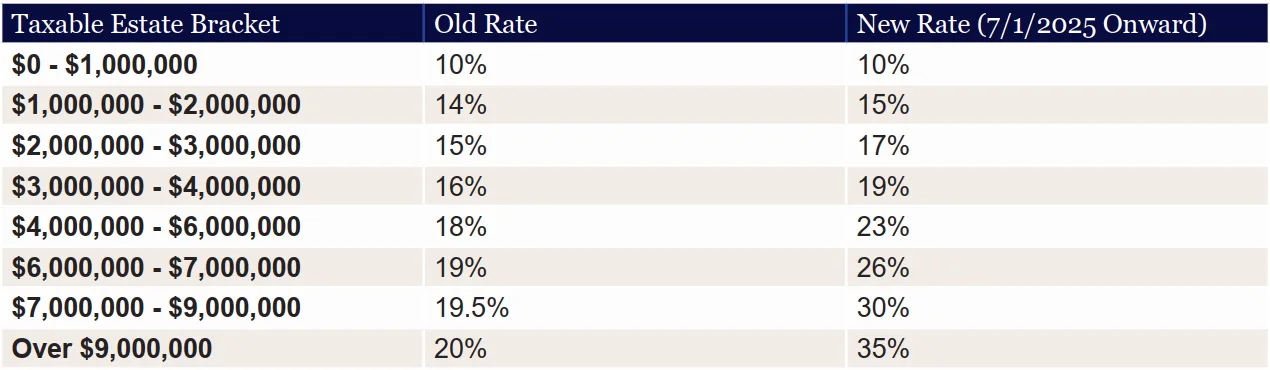
- The estate tax exemption rose from about $2.2 million to $3 million, with annual inflation adjustments starting in 2026.
- The top estate tax rate increased from 20% to 35%.
- Rates on estates between $1 million and $9 million also increased.
- Family business and farm deductions expanded, providing some added flexibility.
Business & Occupation (B&O) Tax on Investment Income
Washington’s B&O tax is based on revenue, not profit. The state recently clarified rules for investment vehicles:
- Trusts and estates may continue deducting investment income if they meet certain criteria.
- Family LLCs, however, do not qualify and could now face B&O tax on investment income.
If you own or manage a family LLC, this is an important time to speak with your CPA.
What You Should Do
- Review your estate plan considering the higher exemption and new tax brackets.
- If you expect large capital gains, consider timing and planning strategies.
- If you have a family LLC, check in with your CPA about potential B&O tax exposure.
Final Thoughts
While these changes aim to boost funding for education in Washington, they also bring new planning considerations. Everyone’s situation is unique, so we encourage you to connect with your Freestone Client Advisor or tax professional to make sure your strategies stay aligned with your goals.
Important Disclosures: This article is not intended to provide, and you should not rely upon it for accounting, legal, tax or investment advice or recommendations. We are not making any specific recommendations regarding any financial planning, investment or tax strategy, and you should not make any financial planning, investment or tax decisions based on the information in this article. This article is intended to be educational in nature and to discuss a few limited aspects of very complex legislation or other complex subject matters. This article is not a comprehensive or complete summary of considerations regarding its subject matter. We recognize that every individual has different needs and the opinions expressed in this article may not be appropriate for everyone. Please consult with a Freestone client advisor, accountant, or lawyer regarding options specific to your needs. Please note that Freestone does not approve or endorse any third-party content hyperlinked to in this article.